The concept of a psychiatric clinic is not very new, but if you go and read the history, you would realize that it was a much scarier place than what it is today. With plenty of reforms, over the years, medical professionals have made their occupation more client friendly than it was before.Similarly, psychiatrists have worked hard to break away from…
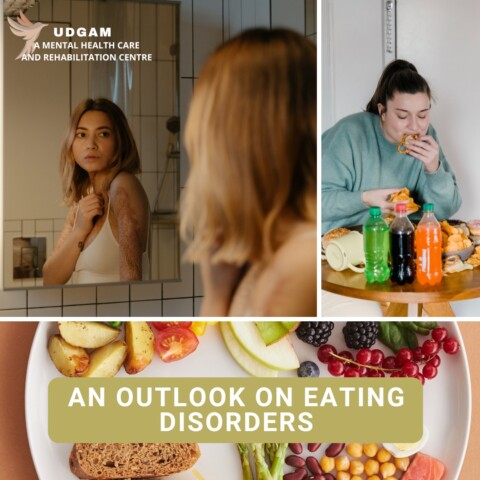
An Outlook on Eating Disorders
Eating disorders have been made very popular by mass media. but still misunderstood. According to scientific literature, eating disorders are defined as disturbed eating and eating-related behaviour which leads to a pattern of consumption of food that hampers physical health, mental health and social functioning.
This consumption of food is not just based on diet, but also on self-harming behaviour of purging or starving.
Signs of Disturbed Eating
Many individuals hold this misconception that eating disorders are something like dieting, a lifestyle choice. But it is not so. Eating disorders come from dysfunctional thought patterns and preoccupation with body size or image. These dysfunctional thoughts come either due to a lack of control over the environment or external pressures. This does not imply that there are only a handful of reasons, instead eating disorders are diagnosed alongside other disorders like depression, PTSD or OCD.
Signs of an eating disorder can be easily hidden, or be visible like:
- A sudden drop in weight
- Reducing muscle mass
- Aversion to food/ eating more
- Thinning of hair
- Mood swings/ agitation
- Reduced capacity to work
- reduced concentration
- Lower self-esteem
- Social withdrawal
- Do not like to eat with other people
- Throwing away food
- Lower libido
- Dizziness/ fainting
- Frequent trips to the washroom
- Sore throat
- Heartburn and gastroesophageal reflux
- Menstrual cycles problems
- Problems in regulating body temperature
- Recurrent diarrhoea
- Osteoporosis
All of these signs should not be explained by any other physical illness.
Causes of Eating Disorders
There are no fixed causes for an eating disorder. Genetic composition does show why some people have a higher risk of ED, but there are many who without any family history also develop ED. Sociocultural aspects from mass media or standards of beauty have often been pointed out.
The worldwide prevalence of eating disorders is almost 2% and 5%in adolescents and young adults. But there is no fixed or accurate percentage prevalence of ED in India. Yet we know from many studies that ED occurs more in women of ages 15 to 35 but it can occur at any age and affect any gender. They can also occur along with other mental health disorders like depression, anxiety, PTSD etc.
Types of Eating Disorders
There are three main types of eating disorders: anorexia nervosa, bulimia nervosa and binge eating disorder.
Anorexia Nervosa
It is characterised by dieting for weight loss, in such a way it impacts overall health, leading to low BMI, starving self and fear of gaining weight/fat. It has the highest mortality rate out of all the other EDs.
Here the loss of control over emotions, thoughts, and intense fear of being fat or overweight leads these individuals to eat less/ starve themselves to lose weight. Individuals can be thin, and still believe themselves to be fat or imperfect. This disorder leads to a lot of problems in social, physical and psychological areas of life. People can cut out family/friends, and activities that give them pleasure, slowly losing the energy to keep going physically.
The disorder can stay hidden for a good while before it starts to seriously impact physical health.
Bulimia Nervosa
Individuals with bulimia typically do not starve themselves. Bulimia is characterised by eating low-calorie healthy food and under certain moments, consuming high-calorie food. This consumption is an impulsive behaviour, that is performed due to a sense of lack of control and distress. This eating then leads to embarrassment or self-hate. The above pattern is followed by compensatory behaviour in the form of purging, fasting, laxative misuse or extreme exercise. On average, at least once a week for three months, the eating of high-calorie food must be followed by compensatory behaviour, for a diagnosis.
Binge Eating Disorder
The disorder, unlike bulimia, does not have any harmful compensatory behaviours. It is characterised by the consumption of high-calorie/ excess food, and overeating, followed by feelings of shame or upset due to lack of control. overeating goes beyond an individual's capacity to eat and usually is done in secret, due to feelings of distress around eating. At least once a week for 3 months these symptoms should appear for a diagnosis.
Treatment for Eating Disorders
Each case of ED will have a personalised treatment plan to target their negative core belief and declining health. It would focus on psychological, behavioural, nutritional and other medical complications.
- Pharmacotherapy: other than managing symptoms of gastric or muscular troubles with medications, psychiatrists usually also prescribe an antidepressant or anti-anxiety medication to help with any comorbid symptoms.
- Psychotherapy: is one of the tools to help individuals work on their core beliefs which initiated or maintained their thought patterns leading to ED. Therapy helps individuals to learn to understand, organise and manage their emotions/thoughts/beliefs/behaviours.
- Group Therapy: having a supportive group of individuals, all going through struggles of their own. Sharing and hearing opinions in such a group is often seen to be insight-generating.
ED often go unnoticed for a long time, until they seriously start impacting health. Many people remain unaware of their eating habits. The first step is to generate insight into an individual. Left untreated, people with eating disorders can develop life-threatening complications.
Take a consultation if you ever feel that your relationship with food or body image is getting worse, which impacts your daily life. contact us for an appointment. And remember that early diagnosis, treatment and precaution are helpful.
[ratings]
Anuja Sathe
Counselling Psychologist
Tips for a Flexible Parenting StyleReading books or going online for more and more tips on how to help your children is a common occurrence with most parents. We approach parenting just like we prepare for any other subject. Want to try a new recipe, research it, or get into a new hobby, research it. Research is a method to…
Common Styles of ParentingParenting is the most rewarding yet challenging experience in life. It is the parent that gives the child a stepping stone to integrate themselves into society. Children imitate learning. If you show good they’re likely to learn well. But a good habit depends on that child’s introspection, perception, and experiences. So show them better ways to handle…
The fourth leading cause of death in young adults, suicide is a global phenomenon. People across lifespans are at risk. More than 7 lakh people die every year. Suicide is harm caused by the self with the intention to die.Popular opinion is that suicide takes just one moment to be successful and many failed attempts. Yet there is a tendency…
Enmeshment in Our RelationshipsRelationships are tricky things, both partners mature with time and experience. With the advancing concept of boundaries in a relationship, the topic of nonexistent or enmeshed boundaries is also being studied. In many relationships, the idea of being the caring one or the one who satisfies every need is seen as being in love. What is an enmeshed…
Four Things You Should Know About Relationship CounsellingRelationship counselling is a part of a system of counselling methodologies. As the word suggests it focuses on describing, building, analysing, and reforming relations between people. There is no fixed number of people who could take a session together, but generally, two are preferred at a time. The sessions can be both online…
What are the Boundaries of Your Relationship?Boundaries are an important concept in a relationship. They are permeable, flexible, and relationship-specific. Boundaries describe how close you let others in your life, physically or emotionally, and how much influence others have on you. It also decides how much you are willing to give or take before a change is needed. Many people believe…
Basics of a Relationship“Honesty is the best policy”, and that is true for every relationship. When the intentions of the past, present, and future are clear, then a proper foundation can be laid down. But the meaning of a relationship is different for everyone. Not every feeling can fit into a box made by society. And that makes each bond…
Best Child Psychologists Child psychology is a branch of psychology that is responsible for understanding, describing, diagnosing, and treating the behaviors in children. A child psychologist is specially trained in dealing with childhood disorders and difficulties. They are proficient in conducting psychometric assessments on children for a more objective outlook and in forming a rapport with children so that they…