

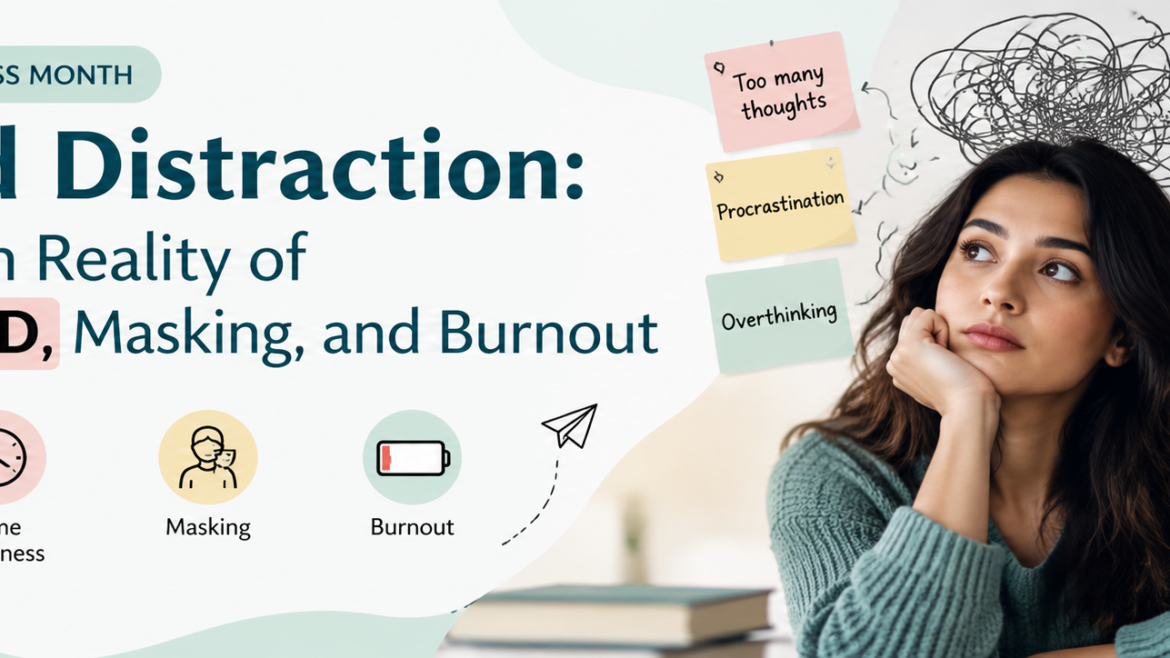
Beyond Distraction: The Hidden Reality of Adult ADHD, Masking, and Burnout
For decades, the public perception of Attention Deficit Hyperactivity Disorder (ADHD) was shaped by a narrow stereotype: a young boy disrupting a classroom. Today, conversations around ADHD increasingly include adults, late diagnosis, masking, and the challenges of ADHD-related burnout.
If everyday tasks such as replying to an email, starting a project, or keeping track of time feel unusually difficult, it does not automatically mean you are lazy or lack willpower. Executive functioning difficulties can affect how a person organizes, initiates, and completes daily activities.
1. Executive Dysfunction: More Than a Lack of Willpower
ADHD can affect the ability to regulate attention and manage everyday responsibilities. Some people experience difficulties with executive functions, which help us plan, organize, remember information, and move from intention to action.
- Task initiation: Finding it difficult to begin a task, even when you understand its importance.
- Time blindness: Struggling to estimate how much time has passed or how long a task may take.
- Working memory: Having difficulty holding and using several pieces of information while completing a task.
- Emotional regulation: Experiencing challenges managing intense emotions in certain situations.
Some people with ADHD also experience hyperfocus, becoming deeply absorbed in an interesting or rewarding activity and losing track of other responsibilities. Experiences vary from person to person.
2. Late-Diagnosed ADHD: Why Some Adults Were Missed
ADHD may go unrecognized during childhood, with difficulties becoming more noticeable when adult responsibilities increase. Some adults, including women and high-achieving professionals, may develop coping strategies that make their challenges less visible to others.
This process is often described as masking. It can involve extensive preparation, repeatedly checking work, hiding difficulties, or spending extra time trying to meet expectations.
These strategies may help someone manage school, work, or family responsibilities for a time. However, maintaining them can become exhausting when demands increase. If you regularly feel overwhelmed despite working hard to keep everything together, consider discussing your concerns with a qualified mental health professional.
3. Understanding Workplace Burnout and ADHD-Related Exhaustion
Workplace burnout and exhaustion associated with ADHD-related challenges can overlap, but they are not interchangeable diagnoses. Understanding the circumstances behind your difficulties can help guide appropriate support.
| Dimension | Workplace Burnout | ADHD-Related Exhaustion |
|---|---|---|
| Possible contributing factors | Heavy workloads, prolonged overtime, or an unhealthy work environment. | |
| Ongoing executive-function demands, masking, and difficulty managing daily responsibilities. | ||
| Mental exhaustion and increased difficulty organizing or completing everyday tasks. | ||
| Individualized support, practical routines, environmental adjustments, and assessment when appropriate. | ||
| Common concern | “My workload has become overwhelming.” | “Why do everyday tasks feel so difficult even when I am trying hard?” |
These experiences can have several causes, including stress, sleep difficulties, depression, anxiety, and other health concerns. A qualified professional can help assess what may be contributing to your symptoms.
4. Practical Strategies: Build Systems Instead of Relying on Willpower
When planning and organization feel difficult, small changes to your environment and routine may make everyday tasks more manageable.
Seek Appropriate Professional Support
If ADHD symptoms are affecting your work, relationships, or daily life, consider an assessment with a qualified professional. Treatment options may include psychological therapy, practical skills support, and medication prescribed and monitored by an appropriately qualified medical professional.
Make Tasks Visible
Use calendars, visual timers, written checklists, and whiteboards to reduce the need to remember every task mentally.
Reduce the Effort Needed to Get Started
Keep frequently used work materials in an accessible place. Break larger projects into small, specific steps and identify one manageable action to begin with.
Try Body Doubling
Body doubling involves working alongside another person, either in person or remotely. For some people, having another person present can provide structure and make it easier to stay engaged with a task.
The Takeaway
Executive-function difficulties are not proof of laziness or a personal failing. Understanding your experiences can help you replace self-blame with practical strategies and appropriate support.
If persistent difficulties with attention, organization, time management, or exhaustion are affecting your life, consider seeking guidance from a qualified mental health professional. You deserve support that takes your individual needs and circumstances seriously.
Frequently Asked Questions About Adult ADHD
Can someone develop ADHD in adulthood?
ADHD is a neurodevelopmental condition that begins in childhood. However, it may not be recognized until adulthood, when responsibilities increase or existing coping strategies become less effective. A professional assessment can help clarify the reasons for ongoing difficulties.
What is time blindness in adult ADHD?
Time blindness is an informal term for difficulty perceiving the passage of time or estimating how long activities will take. Some people with ADHD experience this as lateness, difficulty planning, or losing track of time while absorbed in an activity.
How does ADHD differ from depression and anxiety?
ADHD, depression, and anxiety are distinct conditions, although they can occur together and share some symptoms. Difficulties with concentration, motivation, sleep, or completing tasks can have multiple causes. A qualified professional can help assess symptoms and determine appropriate support.
This article is intended for educational purposes only and does not replace professional assessment, diagnosis, or treatment.